

The SAVE Act is doomed...because of Republicans?
For now, the GOP is stopping it (but call your senators anyway).

If you like this article, consider becoming a paid subscriber. It keeps this newsletter free for all (paid subscribers also attend Zooms where you can ask me anything). You can also support me by ordering my book, What Does the Constitution Actually Say?, or its kids version.
In an interview with Fox News, Senate Majority Leader John Thune admitted how doomed the SAVE Act really is.
“There are a majority of Republican senators who don’t want to go down that path,” he said, referring to sidestepping the filibuster to pass the bill.
A majority? That’s 27 (at least) of 53 Republican senators.

Let’s pause for a moment. You need 51 votes to pass a bill in the Senate, but 60 votes to end debate. If debate never ends, the bill never gets a vote. That’s the filibuster. (Watch this episode of my PBS show, Civics Made Easy, for an explainer.)
There are really three ways to circumvent the filibuster:
Get to 60 votes, AKA ‘invoking cloture’, which stops debate and allows a vote
Remove the filibuster from the rulebook, which requires 67 senators (two-thirds)
Tweak the filibuster — or suspend it temporarily — which requires 51 votes (or 50 plus the VP as a tie-breaker)
In short, if you can’t do one of those, you can’t vote on a bill.
To clarify, the SAVE Act (read here) passed the House on February 11th. It’s supported by at least 50 Republican senators. But 50 aren’t willing to circumvent the filibuster to pass it. And there’s no chance Republicans get seven Democrats and Independents to join them in reaching 60 (in the bill’s current form).
Why? Because Democrats would be harming their own reelection prospects. And the stated goal of the bill — to prevent noncitizens from voting — is bullshit.
Noncitizens already can’t (and don’t) vote in federal elections. There’s a federal law against it. There’s been state law against it, in every state, since 1926. Top elections officials in Georgia, Louisiana, Michigan, and Texas recently analyzed noncitizen voting. So has the Heritage Foundation. None found that noncitizens were registering to vote, or voting, in meaningful numbers. (I say ‘meaningful’ because, since 1982, there have been a handful of cases — 1,620 — of 1.8 billion votes cast).
As it stands, you just need to attest to citizenship under penalty of perjury when registering. That means noncitizens who do vote risk deportation and criminal penalties. So, they don’t.
In that Fox News interview, Thune admits the SAVE Act is about making Democrats look bad. He wants videos of them opposing photo ID to vote, or citizenship proof to register, for campaign ads. Thune also doesn’t want to use the ‘talking’ filibuster to pass the bill, which would require senators to actually stand and debate (rather than threaten to do it). This would allow Democrats to propose unrelated amendments to the bill around Iran and Epstein. Republicans would have to take tough votes where they would look bad.
Politics aside, the bill solves a nonexistent problem — but it would cause real problems for people without documentary proof of citizenship (a passport, military record, birth certificate with matching current ID, or Real ID showing citizenship — which is only available in five states). Anyone who lacks proof would be unable to register. Studies also show this would affect women, people of color, young people, and low-income people — all groups needing their own constitutional amendment to protect their voting rights.
But there’s another part of the bill that isn’t getting enough attention.
The SAVE Act requires you to show photo ID to vote. Ten states do this already. Yes, if the ID costs money, that’s a poll tax (poll taxes are banned by the 24th Amendment). But strict photo ID already exists in 20% of states. It’s not that controversial.
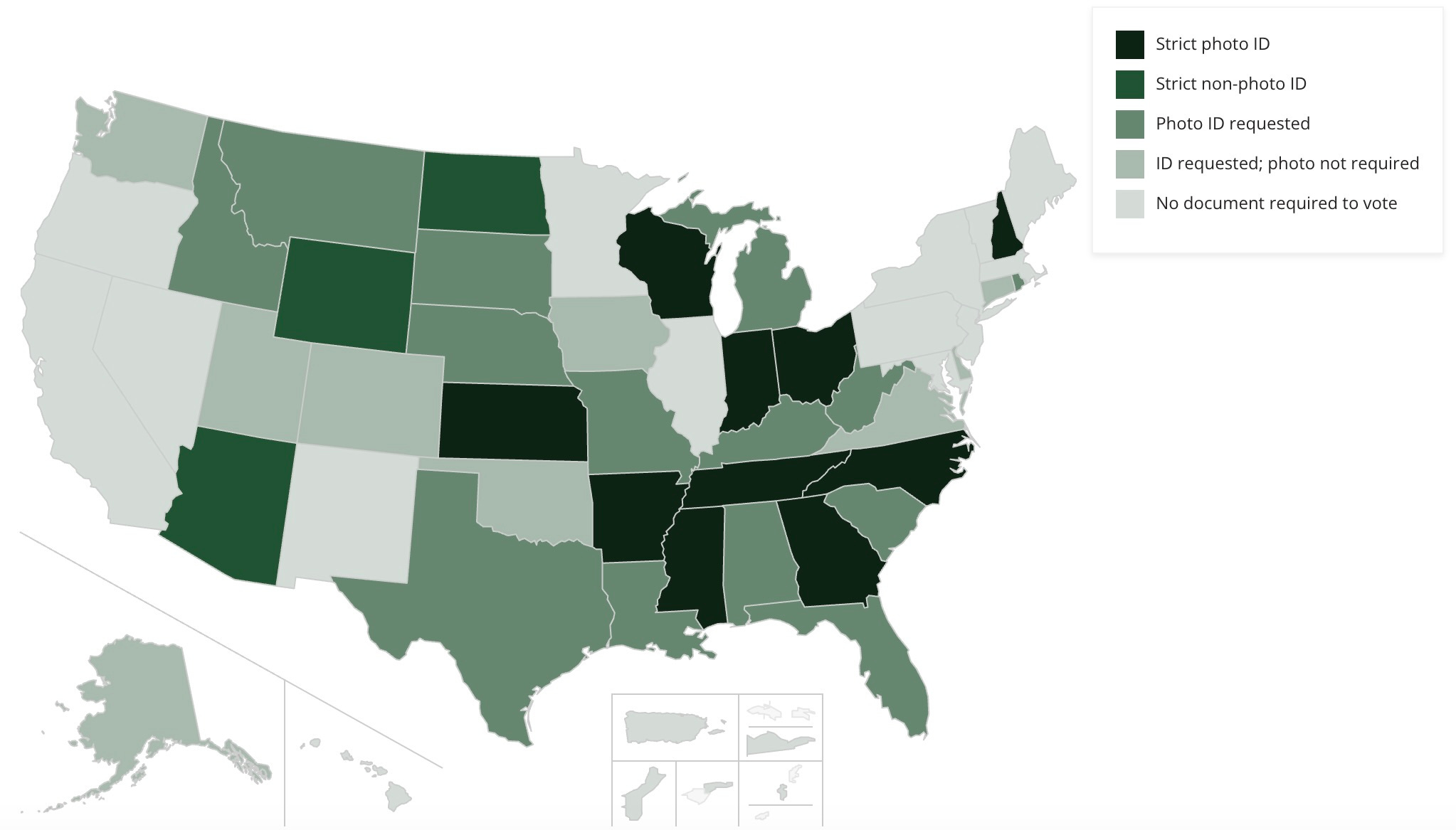
In fact, it’s a decoy. Here’s the real point of the SAVE Act:
The bill requires documentary proof of citizenship to register to vote. That would require time and money to obtain (10% of American adults don’t have documentary proof of citizenship.) There could be delays, shutdowns, mail issues — all sorts of reasons your documents could take longer than expected to arrive.
But here’s the kicker: A clause in the bill requiring states to run their voter rolls (lists of registered voters) through one of three databases:
The Department of Homeland Security’s SAVE system
The Social Security Administration
A state-created system
These databases would search the rolls for noncitizens. If found, states would have to remove those people from the rolls. Sounds simple, right?
If it was accurate. If it wasn’t, it could remove citizens from the rolls.
Which the DHS system is already doing.
Texas and Missouri have chosen to preemptively run their rolls through DHS. They found an error rate of 14-50% (as many as half of those flagged as noncitizens are, actually, citizens).
The bill would also require states to submit their voter rolls quarterly to DHS. That means March 31st (Q1), June 30th (Q2), September 30th (Q3), and December 31st (Q4).
Of these, Q3 stands out.
If DHS erroneously flags a citizen for removal, they’d have to reregister. September 30th is around when early voting begins and when voter registration windows start closing. A citizen who’s ‘accidentally’ removed may not realize it until mid-October. By then it may be too late to re-register; if it isn’t, the person might not be able to get the necessary documents in time.
It’s kind of (evil) genius. And I haven’t heard a single person or outlet mention this.
This week, the Senate began debating the SAVE Act. There’s still time for GOP senators to change their mind about the filibuster, especially given the intense pressure from paid social media influencers (like Scott Presler, one of the oddest people on the Internet) and the president.
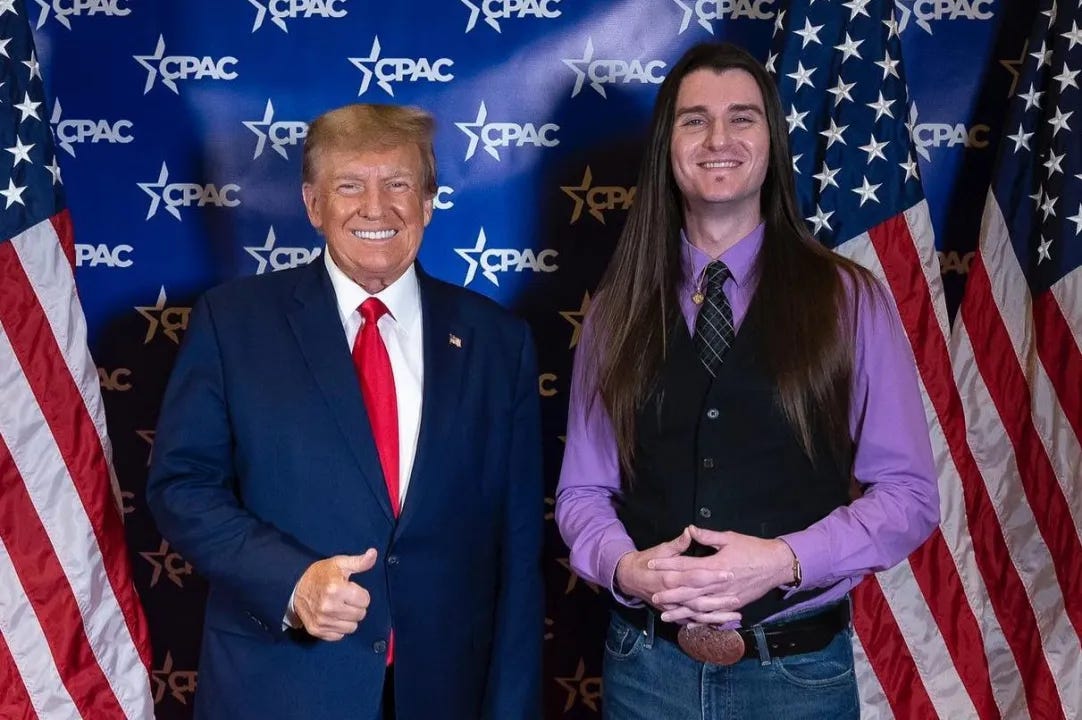
Trump says the SAVE Act is his “#1 priority” and could “guarantee the midterms” for Republicans. He won’t sign any bills until Congress passes it. He’s withholding his endorsements of Republican senators for reelection unless they agree to sidestep filibuster to pass the SAVE Act. He’s determined.
Among sitting Republican senators, Mike Lee (UT) supports revising the filibuster to pass the bill. Senators Josh Hawley (MO) and Ted Cruz (MO) are also onboard. But Lisa Murkowski (AK), John Curtis (UT), Kevin Cramer (ND), and Thom Tillis (NC) are not. If just four Republican senators oppose sidestepping the filibuster, that sinks the bill. Thune says that at least 27 GOP senators oppose it (if he’s telling the truth).
That’s more than four.
If the SAVE Act does somehow pass, Americans will need documentary proof of citizenship to register to vote. They’ll need to monitor their registration status to make sure they aren’t kicked off of the rolls. They’ll need to present photo ID at the polls (and mail a photocopy of their ID along with their ballot if voting by mail). The sheer number of people it would affect — in all states — also gives Republicans pause, because they aren’t sure who would be most suppressed.
“The votes aren’t there, one, to nuke the filibuster, and the votes aren’t there for a talking filibuster. It’s just a reality…I’m the person who has to deliver sometimes the not-so-good news that the math doesn’t add up, but those are the facts and there’s no getting around it”
- John Thune (on March 10th)
As for which states may embrace running their rolls through DHS, 26 already do it. The system’s high level of inaccuracy is very much cause for concern.
Thankfully, the SAVE Act seems doomed. But if you’re worried, call your two senators (202-224-3121) and tell them to oppose the bill and sidestepping the filibuster to pass it. In general, make sure you have documentary proof of citizenship. Check your registration regularly to make sure that you aren’t kicked off.
It’s a lot, I know. But Senate Republicans seem to be doing the work for you (for now). Of course, nothing’s guaranteed.
Better to be safe then unregistered.